
DMs: the constant ping problem 🔔
A neuroscientist explains what to do
Read time: 5min
Join 23,118 Good Busy leaders
“The brain doesn’t perform in isolation. It performs in context." - Amy Brann
Hi,
How was your last week?
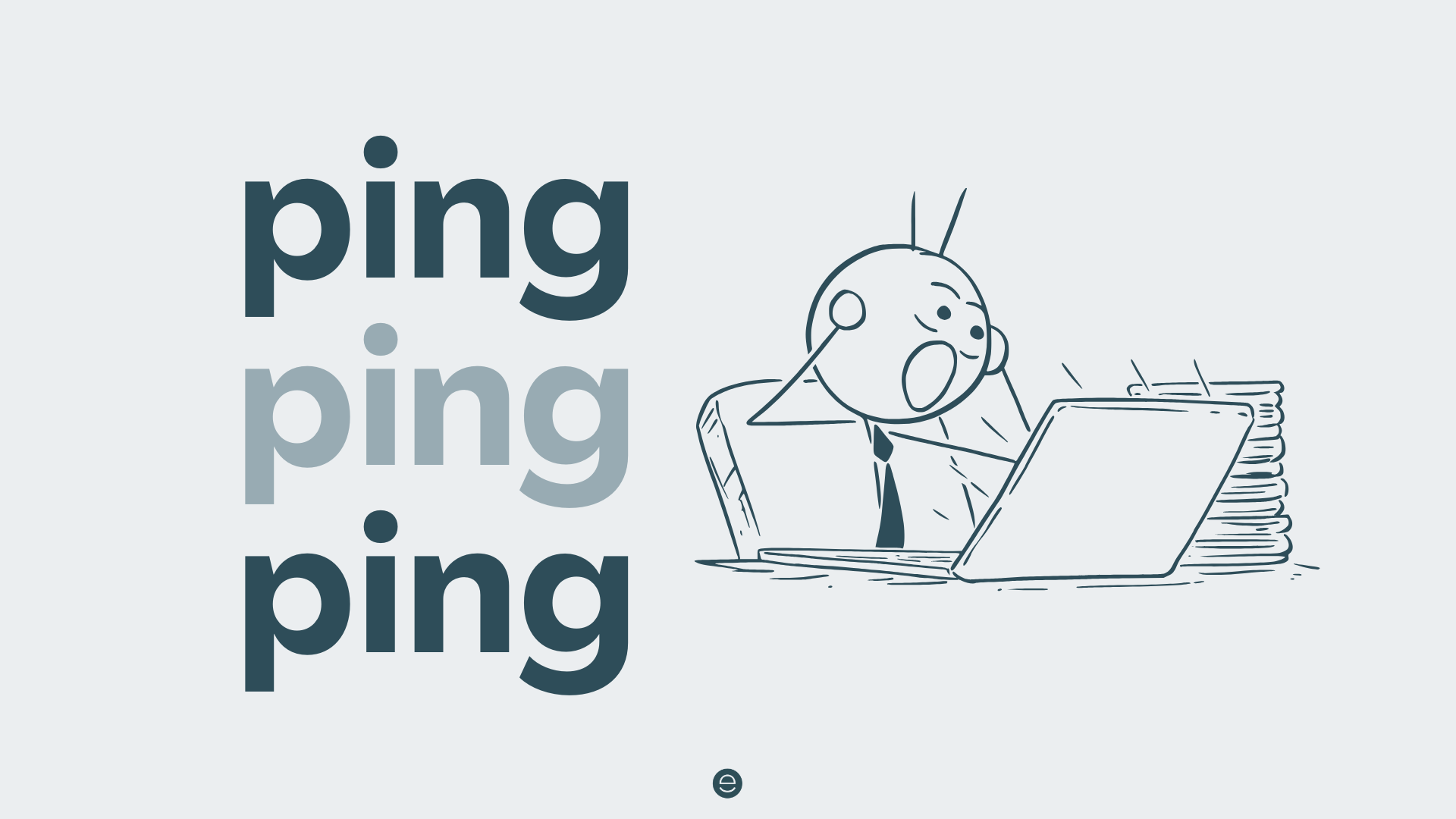
It’s 10am. You have been scrapping through your inbox for the past hour. Now you’re finally ready to finish the strategy presentation due tomorrow. But… you hear…
Ping…
You think: “It can wait.”
Ping…
You think: “But what if it’s urgent.”
Ping…
By now, you’re certain it is. Because there was that one time when you didn’t instantly check and it actually was.
Why share this with you?
Because constant pings (Slack, Teams, WhatsApp) come up in almost every program session I deliver: “What do I do with constant pings?” “What if I miss something important?” “What if I let someone down?”
All valid questions. They say the answer is in the question. But what if these aren’t the right questions to solve the ping problem?
the why
In 2007, Joshua Bell, one of the world’s greatest violinists, played a 3.5 million dollar Stradivarius outside of a buzzing metro stop in Washington DC. He played for 45 minutes. Over a thousand people walked past but only seven stopped to listen.
Just two days prior to this experiment, he had sold out a theater in Boston where seats averaged $100 each.
Same musician. Same music. Different context. And completely different result.
Amy Brann, neuroscientist and founder of Synaptic Potential, reminded me of this story during her keynote at a conference I attended in April. She shared it to make one point:
The brain doesn’t perform in isolation. It performs in context.
And context isn’t just where you are. It’s the information your brain has been fed: what you’ve seen, heard, experienced, and been told. Amy says our brain is a prediction machine. It doesn’t react to what’s in front of it right now, but to context it has been continuously exposed to.
We eat differently in a clean environment than a messy one. What we see is information.
We perform differently when we’re told — before we even begin — that people like us struggle with this specific task. What we hear is information.
And DMs are a perfect example. They created a context of urgency because they feel like the quickest way to reach someone. No need to coordinate the calendars, no more effort to structure your thoughts in an email, just shoot a DM. You were told that DMs will help you communicate faster and more effectively. That’s information too.
That’s how meeting conversations, emails, and calls end up living and adding volume to your DMs. And because it’s the quickest way to reach someone for "urgent” things, your brain rings the fire alarm every time it hears: ping.
On top of it, if you have missed one genuinely important DM in the past year, you brain now predicts on that one experience too: if one was urgent, it means every single one is urgent. And now, you’re a brave firefighter, always on the alert, always ready.
Your brain is doing exactly what it was trained to do.
the how
Changing company context takes time and effort. But you can start building your own.
Because here’s what happened: you got the tool (Teams, Slack, whatever) and were told to use it. But nobody set expectations for when to use it, what it’s for, and what actually requires an immediate response. And that gap is where unnecessary urgency and overwhelm thrive — in the constant guessing of what’s expected of you.
That’s why the right answer to your question “What do I do with constant pings?” is in a better question: “How do I reduce the DMs that shouldn’t be there in the first place?”
There are no universal rules for when and what to DM. It depends on your role, your team, your industry, and it can even be seasonal. I had seasons in my corporate days: a regular season and an event operations season. My DM rules looked different in each.
Here’s what mine looked like in a regular season:
DMs only for time-sensitive, quick, or genuinely urgent messages
Messages kept concise and actionable
Response time under 15 minutes during working hours
1:1 or small group chats only (under 5 people)
Status set to show availability (i.e. ‘busy’ in meetings or during focus time)
It doesn’t have to be complicated. It has to be clear. Because the volume of DMs decreases, and with it the uncertainty and fear of missing something important or letting someone down. You give your brain a new context where not everything is a fire.
Share this with your stakeholders. Agree on it together. And give each other a new context to work with.
The Kaizen Tips for Happier You at Work mini course (under 8min) covers your workspace context — more focus, less overwhelm. Access all mini courses when you upgrade your subscription along with upcoming free event end of June.
your play of the week
Your ping rules 🔔
If constant pings are preventing you from focusing and creating the fear of missing something important, write down your personal DM rules. A few questions to help you start:
What are DMs actually for in my role?
What response time is realistic (and what am I assuming others expect?)
Who do I need to align with?
You don’t need to send it to anyone yet. Just writing it down starts retraining the prediction.
If this resonates and you’re ready to actually free up time from work that simply shouldn’t exist, The Good Busy Reset will take you there step by step.
Because nothing changes if nothing changes. The meetings, emails, and calls living in your DMs will keep piling up, and so will the urgency — until you give your brain a reason to think differently.
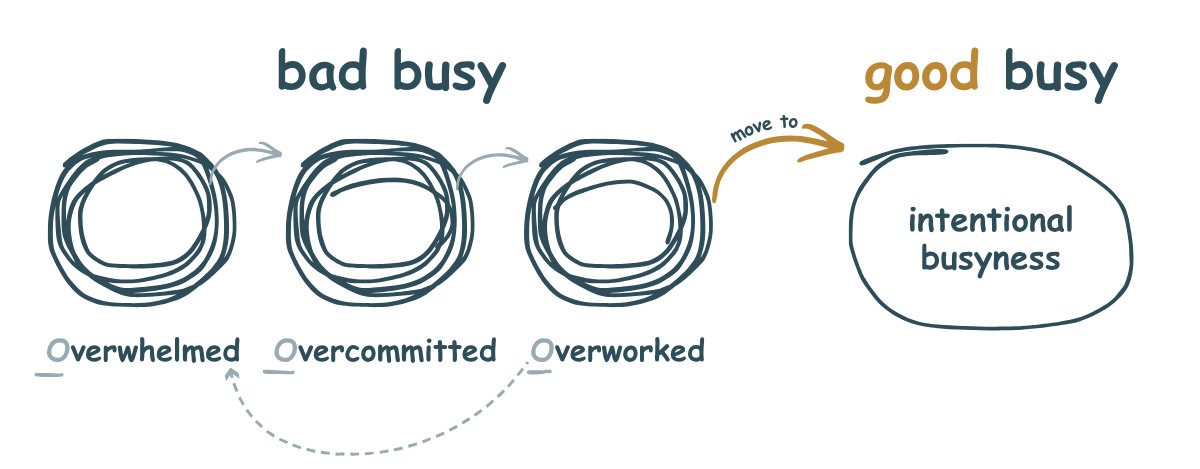
23,000+ leaders are freeing up time from work that shouldn’t exist with The Good Busy Newsletter. If it helps you, refer it to a friend.
I know productivity - not illustrations. Stickman figures by Zdenek Sasek.
Thank you for being here.
See you next Monday,
Kate
Founder, TheGoodBusy.com

PS: Some work simply shouldn’t exist. Master Good Busy and free up that time for work you’re proud of and what (and who) you love after work.
Here’s how I can help:
See how Good Busy works in my free workshop
Free up 8+ hrs/week from bad busy work inside The Good Busy Reset
Help your teams free up time from work that shouldn’t exist - custom workshop