Why deadlines explode stress 💣
3 small shifts to calm your nervous system at work
Read time: 5min
Join 23,020 Good Busy leaders
"I love deadlines. I like the whooshing sound they make as they fly by." - Douglas Adams
Hi,
How was your last week?
It’s Monday.
You take a sip of your coffee and open your laptop. You’re in a decent mood. The weekend helped. For a moment, Friday’s stress about this week’s deadlines feels far away.
Then you open your calendar.
Your cortisol spikes.
You’re double - maybe triple - booked. There’s no time to prepare for any meeting. Your inbox looks like it flooded overnight. Post-its, reminders, notifications… all screaming the same word: Deadline.
Your heart starts racing. By 9:15am, the spiral begins: “There’s no way I can do all of this. What’s wrong with me? Everyone else seems to cope.”
You feel overwhelmed, stressed, and - worse than that - ashamed.
So you do what many smart, capable leaders do next. You add another task to your to-do list: research productivity tools, AI, frameworks, anything to become more on top of things.
Why share this with you?
Because before you buy another tool you don’t actually need, or blame yourself for being disorganized and bad at deadlines, there’s an interesting fact you should know.
In a CareerCast Job Stress Study, one in three professionals named deadlines as their number one source of stress at work. (Some even said they fear deadlines more than death.)
So no, it’s not just you.
Let me explain why deadlines fire up such a strong reaction and how to control it before you start another round of self-criticism.
Because if this pattern continues, it will cost you time, money, energy, sleep, peace of mind, relationships, and eventually, your wellbeing.
When I explained this to a client last year - a manager in a tech company - they said: “This is the first time someone is teaching me this.”
They’re right. No one taught me either - not in corporate training, not in college. I learned it through books, TED Talks, therapy, and experimentation with what I was learning.
I hope what follows is worth experimenting with for you too.
the why
I’m not a neuroscientist (and I was terrible at science at school), so here’s the simplest explanation you need:
Your emotions - not your deadlines - create your worst busy days.
You can be completely on top of your work, have just one small deadline, and still feel overwhelmed.
Why?
Because words set off your emotions like tiny bombs - both positive and negative. And your emotions promote your actions or your avoidance of action.
In Words Can Change Your Brain, Dr Andrew Newberg explains:
"A single word has the power to influence the expression of genes that regulate physical and emotional stress."
In one study, 807 participants wore heart-rate monitors while senior leaders casually said common workplace phrases. Heart rates spiked dramatically after hearing a few innocent words like: “Let’s have a chat.”
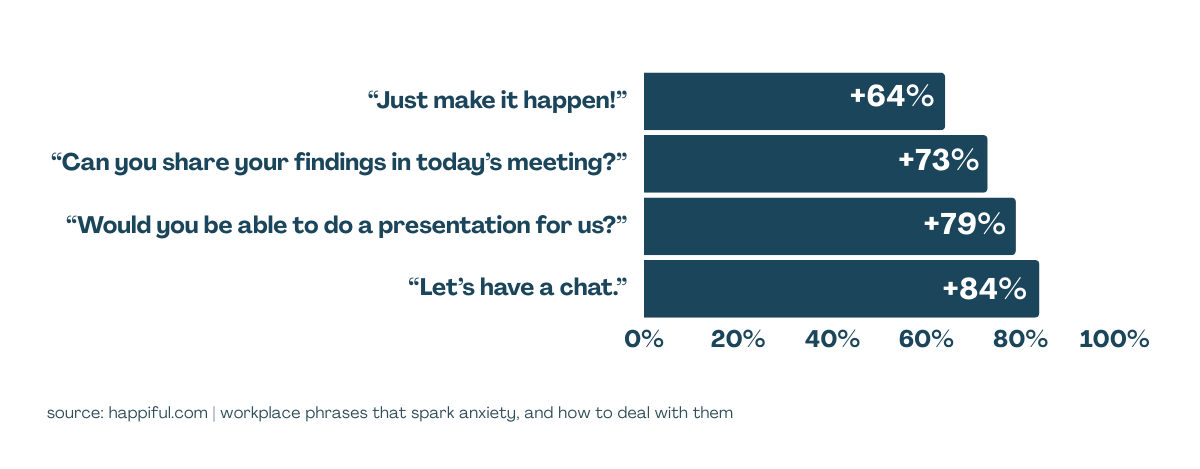
Now imagine what happens when your brain sees the word deadline - again and again.
Your brain doesn’t analyze context. It doesn’t get that this is just work. All it hears is: Dead. Line.
Threat detected. Your nervous system reacts the same way it would to danger because its only job is to protect and keep you safe.
That’s why the stress hits before you finish that first sip of coffee.
the how
Understanding this alone already reduced my stress around deadlines - I could finally rationalize it. But these three simple behavioural changes helped even more. They require no new tools and cost exactly $0.
Change the word
Replace deadline with something neutral and goal-oriented: due date, target date, completion date, submission date, etc.
These words invite focus and are far more likely to move you towards the right action instead of activating your fight-or-flight mode.
Question the urgency
In today’s workplace, everything feels like it was due yesterday. But was it?
When you get a new “urgent” task, ask: “Why does this need to be done today?” or “What’s the impact if we submit it next week?”
Unrealistic timelines discourage - they create avoidance and procrastination. Realistic time frames, on the other hand, encourage and create momentum.
And let’s be honest - deadlines move all the time. Yet, we treat them as if they’re set in stone. It’s an expensive assumption.
For this week’s deadlines, reach out and ask for an extension or help: “Can we move this to next week?” or “Can someone support so we can still deliver this week?”
Plan for it
The word deadline dates back to the American Civil War in the 1860s - literally a line prisoners couldn’t cross without being shot. No wonder your body reacts.
Your deadline is what I call the “last chance,” but you can choose to act long before that.
I met 99% of deadlines in my corporate career and over the last three years building TheGoodBusy.com on my own because I question urgency and plan for them early.
Plans change, yes. But planning removes most of the urgency that explodes your stress.
My daily planning takes under 10 minutes because it’s just enough time to decide fast (and not overplan) what must be done, what can wait, and what can be removed for good. It also gives me flexibility to react fast and intentionally when the plan changes. I call this system Replay & Play.
(I’ve sent this newsletter every Monday since October 2023. I work alone. My to-do list is endless too. Replay & Play is how I stay on top of important things.)
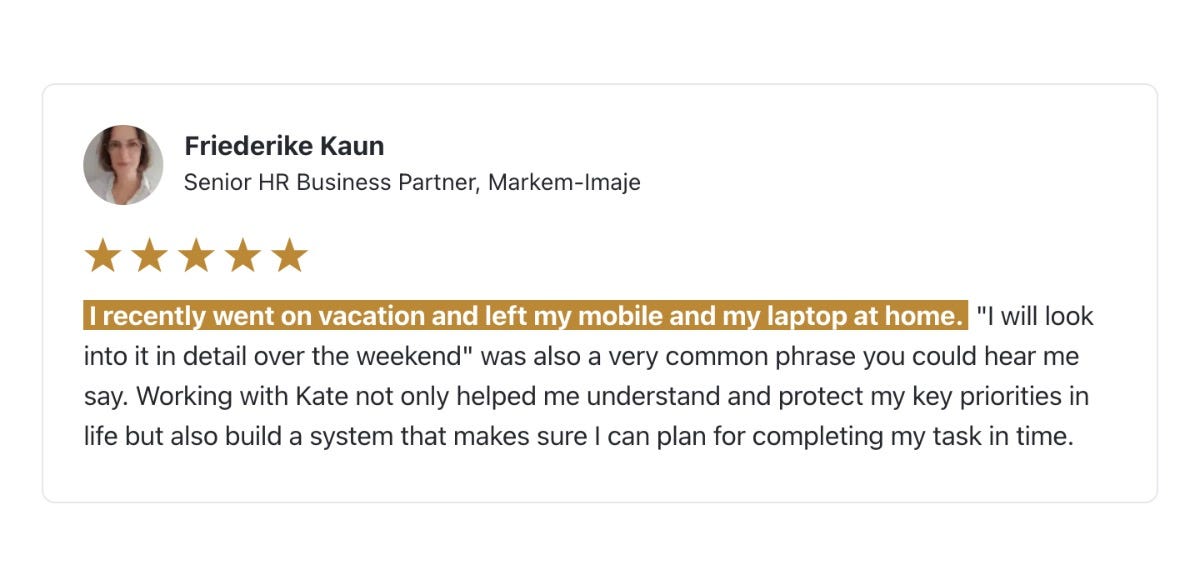
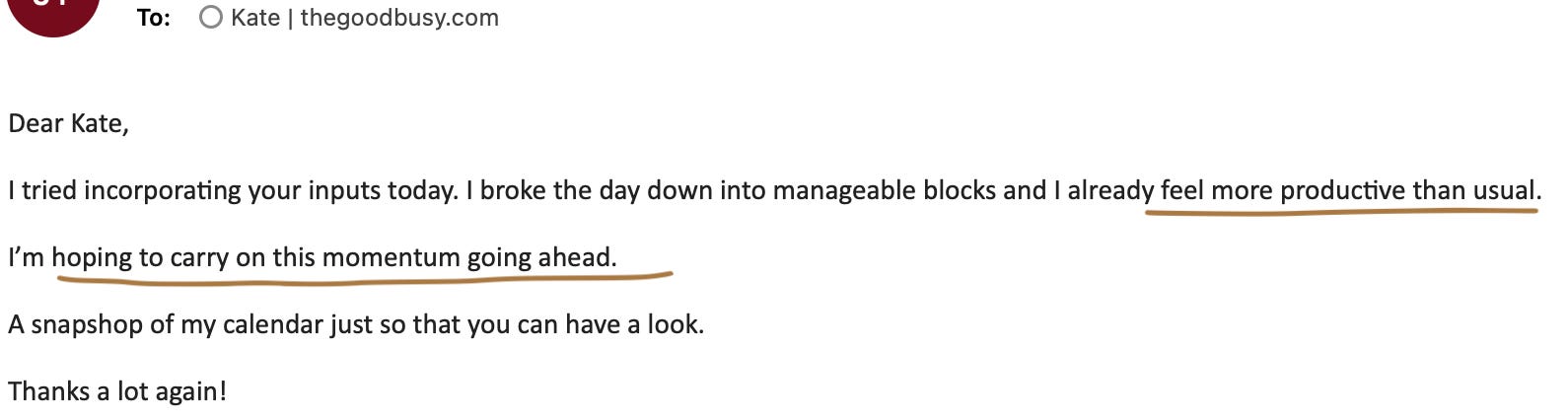
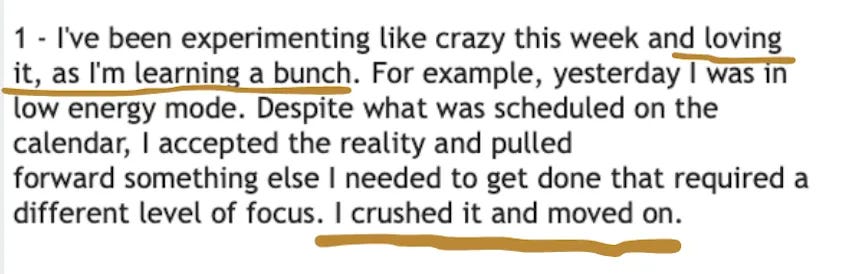
Here’s what my program participants say after learning it:
your play of the week
Disarm your deadlines 💣
This week, when a deadline sets off your stress, pause and disarm it:
Replace the word (suggest it to your team too)
Question the urgency (ask for extension and/or help)
Plan intentionally (but don’t overplan)
And if you want to learn my flexible Replay & Play system to free up 8+ hours a week from unnecessary work (and stress), join The Good Busy Reset - a small group cohort that feels almost personal.
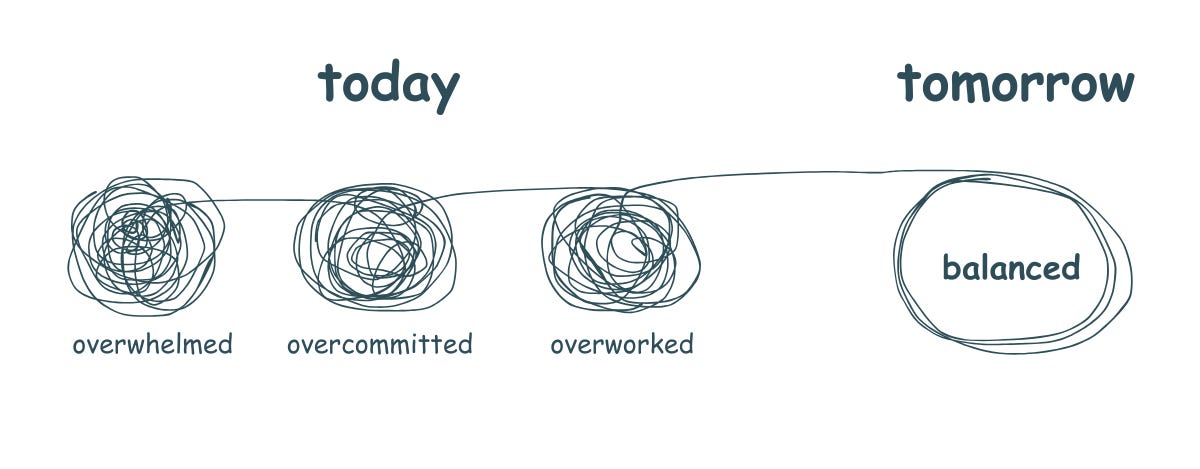
Because the alternative is staying overwhelmed, overcommitted, and overworked (and overstressed) by “urgent” deadlines.
I’m helping 50,000+ leaders master Good Busy.
If The Good Busy Newsletter helps you, refer it to a friend and get rewards.
I know productivity - not illustrations. Stickman figures by Zdenek Sasek.
See you next Monday,
Kate
Founder, TheGoodBusy.com

PS: Are deadlines keeping you awake at night? If you want to stop stressing, master Good Busy alongside a small group of leaders like you inside The Good Busy Reset - trusted by leaders from Roche, Bosch, and more.
PPS: Not sure yet? Get a taste of the tools and mindset shifts that make your balance possible in my free workshop.